Monday, August 12, 2013

The early days of Caliber Press until today - Interview with Gary Reed

Transfuzion Logo


Gary Reed's one of the best publishers of all time and since I read comics from Caliber from its early days until his new publisher Transfuzion.
  I've decided to ask him for an interview with 14 questions and he kindly acepted .
Many great comic authors appeared through Caliber that are major stars today like:
David Mack, Greg Ruth, Vince Locke, Guy Davis among several others.
 Gary was always a low profile kind of guy and I always loved his position in life; he doesn't take anything for granted and knows really well the comic book medium and busyness.
 Check the interview out and you'll notice what kind of man he's and his vision of the comic book medium and market.


 1. How did the idea appear to do a comic publisher such as Caliber with an huge amount of styles on writing and drawings that gathered all the info with influences on other arts? (In here I'm remembering "Sudden Gravity" by Greg Ruth that was a bit inspired on "The Kingdom" by Lars Von Trier and on your own works "Saint Germaine", (that on some ways reminded me of Gogol tetralogy, most particularly of Nevski Avenue among others) "Renfield" with Bram Stoker Dracula Associaton, "Ghost Sonatta" with Strindberg and "Inferno" with Dante's influence and all the other works that appeared by Tome Press illustrated by Gustav Doré among many others).
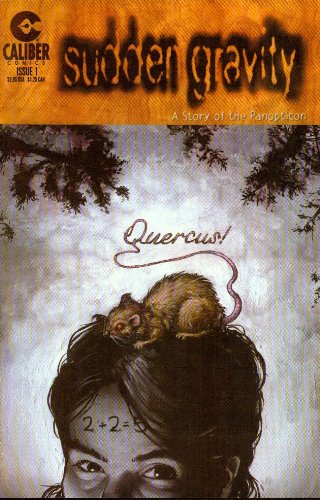


Sudden Gravitty by Greg Ruth

The Kingdom By Lars Von Trier


 Gary Reed: Caliber started in a rather non-descript way.  It wasn’t an organized strategy but rather a somewhat compulsive response. Guy Davis and Vince Locke had their respective titles of The Realm and Deadworld and were looking for a publisher. They were frequent customers at one of the four comic stores I had at the time and I’m not sure when the decision came but I decided to publish them myself so I formed Caliber. Knowing I had those two titles, which both had a following, I came up with the idea of doing an anthology which would become Caliber Presents.  At the same time, a local film company was finishing up with their low budget movie, Moontrap, that starred Star Trek’s Walter Koening and featured Bruce Campbell in a supporting role. Guy wanted to move on from The Realm so he and I came up with Baker Street. A customer of mine heard about the publishing launch and brought in a series he was working on and this :was Jim O’Barr and The Crow.  So, that was the initial formation of Caliber.  With the process of getting the information about the books to the distributors, it took about six months although the first Caliber issue of Deadworld shipped a few months before anything else did because it was already at the printer from the former publisher.


Once the company got up and running, I was swamped with submissions and I knew I wasn’t just going to publish everything that came across my desk.  The comics market was very exciting at the time as the medium was pushing in a lot of different directions and there seemed to be a much higher appreciation of the literary aspect of what comics could be.  I knew I wasn’t interested in superheroes, especially since most of our books were black and white, although I did do a few.  I was looking for intelligent comics with something to say.  I didn’t strategize a particular genre theme or anything, it basically came down to what I personally liked although there were a few that I wasn’t that enamored with but I felt they were good comics and should be published.  So, that was pretty much my philosophy on which books got picked up…what I liked and what I thought deserved publication…they didn’t always coincide.


2. Did you thought at the time that a company as Caliber was an increasing value on the comics market?  


Gary Reed: I never considered the value aspect of the Caliber line.  I mean we did do collectible aspects but overall, the goal was just to put out good books.  The redeeming aspect of the value of the comics going on to me just meant that there was a demand.  I would go back to print on some books to try and fill that demand.


As for value affecting the content part, sure, I think that by doing good books, you’re adding to the comics market medium with some substantial work. I felt the more books out there that appealed to the widest possible audience could only help the comics market grow and reach people who formerly thought comics were synonymous with superheroes. I think we helped foster that quite a bit as a lot of horror fans picked up Deadworld even though they didn’t buy comics…same with fantasy fans picking up The Realm. Baker Street and The Crow introduced quite a few people to comics.  Later, with Tome Press which was the line of historical and literary material, we had far more sales from outside the comics market than in it.  Ah, if only the Internet had been around then.  At the end of Caliber, the ‘net was just ramping up although I think we were one of the first publishers to have an online store but no one wanted to send credit card information online so they would call toll free to pay for their order placed.


3. Regarding once again "Saint Germaine", did you saw it as a possible replacement for the Sandman Series? (You know that "Saint Germaine" is one of my favourite series ever). As a mere note, I don't know if you knew at the time, but in Portugal we've a Saint Germaine that's a Saint associated with killing demons and protecting houses and his statue can be seen on some of our villages in Portugal.


Gary Reed: No, I never saw Saint Germaine like that. I’ll admit that Sandman was an influence just like Alan Moore’s material was at that time was.  Essentially, it showed me that you could write sophisticated material and it could find an audience.  And by sophistication, I don’t mean to imply better but rather the sense it could be multi-layered and structured in different ways.  I was always interested in history and so by creating a character that was an amalgam of different people throughout history, it allowed me to delve into that.  The supernatural aspect allowed me to do that with the character but a lot of potential readers who were interested in the historical part didn’t want to deal with a supernatural character.  But I loved doing that series and keep planning on doing more.

 4. What do you think of "The Walking Dead" comic books and series? Do you think that they were inspired on your "Deadworld" series? (On my opinion there all lots of things in common.)


Deadworld
Gary Reed: Well, this is becoming an increasingly touchy subject.  I have never read the comics but have caught the TV show.  I’m sorta catching up on it as I don’t have time to watch that much TV so everything is on DVR.  Some of the similarities are a bit striking…the guy cutting off his hand and attaching a blade to it, the leader of a band of people with a wife named Laura and a son named Carl who has to kill the old guy of the group because he got bit…the idea of covering yourself with zombie flesh to walk through the zombies…the religious family that our group ends up with…the female with swords who keeps her pets chained up…a town ruled by a megalomania leader…but the RV vehicle was different as Deadworld had a school bus.  So, yeah, some similarities. My first thought was that I didn’t want to be “that” guy claiming it was a rip-off, or at least derivative, but I really do have to set aside some time and evaluate it. I’ve been contacted by a couple of lawyers who want to pursue it but they seemed more the ambulance chaser type.  I don’t know at this point. But I do get a little pissed off when people see all the Deadworld collections coming from IDW as well as the new mini-series and claim that I’m jumping on the zombie bandwagon. Deadworld was first published some 25 years ago and yes, the schedule has been erratic over the years but there’s still at least 75 issues out there.

 5. Regarding Negative Burn (the best anthology ever), how was it for you to promote and publish some of the best stars of comics today? People like: Gaiman, Moore, David Mack, Bendis, Michael lark, Vince Locke, Brian Bolland, Paul Pope, Michael Gaydos, Phil Hester, Guy Davis among many others. Were you pleased with "Negative Burn"?


Negative Burn - Cover by Paul Pope
Gary Reed: Negative Burn was developed by primarily Joe Pruett along with Jim Pruett and some other guys and when it first launched, it was to replace Caliber Presents which ran, I think, 24 issues. Caliber Presents had featured quite of those names but with Negative Burn, the big difference was that Joe secured a lot of big names who did not make their mark at Caliber. Mack, Bendis, Lark, Locke, Davis, and others pretty much made their names at Caliber and were in the first anthology series, but Joe brought in many others as he was working from a different base. Also, at that time, Caliber had a much more visible presence than the early days so we were more of a known quantity.  So, I think it was a bit easier to attract the big names but again, it was Joe mainly, that actually did the work and getting them and he put the issues together. At Caliber, we released 50 issues of Negative Burn, a remarkable run for an anthology.  It was nominated for a number of awards and deservedly so.

 6. I Remember one story written by you with Lord Byron, Mary Shelley and Percy Shelley near a bonfire trying to write the best horror story ever (and Mary wrote Frankenstein), Do you think that Frankenstein was a bit of an autobiography story by Mary Shelley over being married with a guy (Percy Shelley) that had lots of people inside him?


High Caliber - With Percy Shelley story
Gary Reed: That was “To a Poet Dying Young”, illustrated by Galen Showman who also did Renfield and was the main artist behind Sinergy (the collection was re-titled Sin Eternal) which was an updating of Dante’s Inferno.  The short story you mention appeared first in the High Caliber anthology graphic novel which were all original stories by the Caliber talent crew at the time.  My center of the story was how much creative people give up of themselves sometimes when they embark on their endeavors.  It was based on a real event of Percy Shelly having died and the others were so distraught and when they burned the body, it appeared the heart wouldn’t burn.  The character that we emphasize with is a struggling writer who desperately wants to be part of the group, you have to remember that Byron was the rock star of his age, and just wanted to be one of them.  Mary Shelley lets him know that there’s a price to pay and it isn’t worth it.  As for the Shellys, I don’t think the idea of Frankenstein grew from Percy, but rather from the idea of vitalism.  At that time, it was believed all life had a vital force and it was being debated at that time as understanding how basic chemistry and biological systems were fermenting into different ideas.  In their era, they started questioning any kind of mysterious force and if you examine all the stories that the group wrote, they all dealt with some aspect of Vitalism.  Dr. Polidori, who was also part of the group, may have written the first vampire story which again dealt with a vital force but this one was contained in the blood.

 7. Caliber had amazing series on my opinion "Baker Street" and "The Marquis" By Guy Davis, "Saint Germaine", "Deadworld", "Ghost Sonatta", "Red Diaries", "Renfield" by you, which one do you see as your favourite one and that holds a special place on your heart?

Baker Street with Guy Davis


Saint Germaine with Vince Locke
The Marquis by Guy Davis

Renfield with Galen Showman  

Gary Reed: Obviously, my stuff holds more of a special place but I published some stuff I really liked a lot such as Sudden Gravity, Go-Man, and Fringe.  I think those were my three favorites.  As for my material, Baker Street has a special place as it was my first comic.  Deadworld because of how long its lasted but its only been the last few years that I feel its really what I want to do so I’m loving the new series. Ghost Sonata is one that I think is very under-rated, Red Diaries was one I really enjoyed, but as a complete package, I think Renfield is my favorite. I was thrilled when it was used in a University literature class. However, Saint Germaine is probably the one I enjoyed the most and would love to get back to. I think it is the most “me” in the sense that I’m doing what I really wanted to do. I’m actually launching another series, a murder mystery set in early 1900s and I will be doing something similar that I did with Germaine as I’ll be incorporating a lot of historical elements into it.  But it won’t have the supernatural elements, more of chronicling experiences.

 8. Another short story that I really enjoyed was a short story over the character : Rasputin (and I was amazed on how much you knew over european history with some of your stories). Do you view yourself as an avid world history consumer?  


With various artists - Transfuzion
Gary Reed: Yes, I am an avid fan of history.  There are certain time periods that just fascinate me and Russian history is one of those.  I did the Rasputin story you mentioned, also as a new story in High Caliber, with Michael Lark. One of my favorite movies was The Red Tent about survivors in the arctic and I loved the narrative structure of it so I adopted it for this story.  I also brought in Rasputin in Saint Germaine as well as Helsing.  He’s a great figure.  In my biology classes I teach, I bring him up also when discussing genetics and how the Russian royalty fell because they lacked a simple understanding of genetics.

 9. I also remember a tiny story that appeared on High Caliber "amongst the stars" by Jim Alexander and I still think that it's the best science fiction story told in comics format and I compare it easily to some of the best works of Philip K. Dick


My favourite Philip K. Dick book
Gary Reed: That was one of the leads in the comic  version of High Caliber and that was a short lived flip book and Amongst the Stars was in the first two issues, flipped with Ghost Sonata that ran four issues. Jim has released Amongst the Stars into a single comic and I think both physical and digital copies are available.

 Since Caliber had an wide range of writing themes like : Adventure, History, Biblical stories, Children stories, Science-Fiction, Action, horror and Humour, which theme do you think was your favourite one during Caliber days?

Gary Reed: That’s hard to say, I mean, it all depends on the story.  The theme or genre shouldn’t dictate the story and if it does, well, then that’s the focus.  I’m not too much into genre fiction where the genre defines the story.  I like good stories and they can be set in any genre.  So, guess I can’t really say what themes I like or don’t like…it all depends on the story.

 10. Was it difficult to close Caliber comics for good for you?

Gary Reed: Sure. But it was a case of trying to hang on to something for no particularly good reason. The comics market was suffering and it had changed completely. The excitement of the 80’s where it seemed all things were possible was now mired into collectibles and superheroes. Towards the end, I was looking to do some projects which I really didn’t want to do but they might keep Caliber afloat as we were owed a lot of money by distributors and retailers who never paid us. But I started thinking that just publishing anything to keep the Caliber line going was not something I wanted to do.  It was a disservice to everyone involved.  Just like my writing.  I write what I want to write and I don’t take on writing jobs that I don’t want to do, jut for the sake of writing.   Yeah, I could’ve kept publishing but it wouldn’t have been Caliber, even though the logo was on the masthead.  Of course, if I knew how all the opportunities were to present themselves as far as digital goes, I might have stuck it out longer but you can’t go back.  Besides, I think the hiatus of me out of the comics market for a couple of years did me good.

11. Do you think that you're targetting the same public that loved Caliber with Transfuzion?  


Gary Reed: No, not generally.  Transfuzion primarily was all reprint books, much of it from Caliber. It’s branched off to some new material but Transfuzion doesn’t have the same awareness that Caliber had, but at the same time, Transfuzion has some advantages that Caliber didn’t have and most of the sales are online from sites like Amazon and others.  As for appeal, I think that in recent years, diversity among the comic offerings is fairly broad so there’s less need for a specialty publisher.  Of course, most of the comics market still want their comic format and at Transfuzion, it’s all graphic novels…no comics.


 12. What do you think of the comics market nowadays?


Gary Reed: On one hand, I think the quality and diversity is fantastic right now and there are incredible works available but these are primarily what is labeled as the independents. So, the other hand is that the market still seems mired in the superhero world.  Personally, I have no interest in the spandex lines even though I grew up with them.  The characters may have the same names but they’re not the same characters and with all the rebooting of the lines, whatever happens is irrelevant because in a year or two, it will be a moot point.  I do understand, however, that the characters have to keep changing because the limited audience doesn’t want to read the same thing over and over.  The problem is that no new characters from the two major publishers are replacing the original ones and so they have to reuse the masthead characters over and over.  To me, it would be like trying to keep Harry Potter going and just reinventing the concepts and novels every few years so eventually, it becomes totally unrecognizable yet still has the name of Harry Potter. The majors have to figure out some way to bring in new characters to build around but the audience seems to want only the old ones.  I look at it just as do with the Hardy Boys…as a kid, I read every book at least twice but then I moved on.  Same with the superheroes, I’ve moved on.  I still have a fond memory of them but I don’t want to read some twisted version that only has the name in common.

 13 . Do you see technology as an enemy of comic books with E-books, I-pads and with lots of info everywhere on the web?

Gary Reed: No, just a shift of something that’s going to happen however I feel about it.  I personally don’t like to read on a computer or tablet as much as the physical, but I do because lots of times it is just more convenient.  It’s nice to have a library at your fingers all the time.  The digital isn’t the enemy although I do wonder why some publisher are selling out to it so fast. As a publisher, sure, I deal with it but I’m not sacrificing the physical books as right now, it’s not feasible.  Undoubtedly, it will be in the future but I don’t know how long that will take and then I’ll adjust accordingly.

 14. Do you think that the comic book industry will start to fail as a published format or do you've the impression that perhaps it could happen like on the 90's? (when people took lots of photocopies of books but wanted the "real thing")  

Gary Reed: I think it’s likely there’ll be comics as long as there are books.  The comics market is already a small niche market and will likely be able to stay that way for awhile. The collectible aspect plays a role and of course, the tactile crowd who want a physical book also play their part.  But you have a whole generation coming up that won’t be making a choice between physical and digital, they’ll only know digital.  In their minds, they won’t be picking one over the other, they’ll just go with what they know and that doesn’t bode well for the physical books.  Everything has their day in the sun, as they say, and perhaps the comic format is going to go the way of newspaper strips and pulp novels, just like digital squashed CDs, vinyl, VCRs, film cameras, and the like.  They may still be around but not like they used to be.  Technology is to bring new products and devices and that always means they’re replacing something else.


Friday, October 26, 2012

Dominique Goblet no Mab - BD Jornal de Outubro de 2012 - AmadoraBD

Conforme texto escrito por Nuno Franco a ser lançado no festival da Amadora deste ano pela editora: Pedra No Charco, a autora Dominique Goblet que esteve no Mab nos dias 10 e 11 de Março e produziu dois rótulos em parceria com a Niepoort e com a Invicta Indie Arts para esta prestigiada marca de vinhos.
Se puderem comprem a edição deste numero do BD Jornal, visitem o festival e peçam um autografo ou comprem um livro desta simpática artista.

Wednesday, October 17, 2012

Divulgação do Mab na Time Out de Outubro de 2012 - Rótulos


O Festival Internacional Mab Invicta foi falado este mês na Time Out de Outubro devido á colaboração com a marca Niepoort para realização de rótulos para a mesma com artistas presentes no festival: Kai Pfeiffer, Dominique Goblet, Olivier Deprez, Melinda Gebbie e Lars Henkel com o apoio do Goethe Institut e Institut Français e da Invicta Indie Arts.

Mab international comics festival was subject to an article that appeared at Time Out of October due to the work made with Niepoort concerning labels for their wine bottles with artists : Kai Pfeiffer, Dominique Goblet, Olivier Deprez, Melinda Gebbie and Lars Henkel with support of Goethe Institut, Institut Français and Invicta Indie Arts

Wednesday, July 25, 2012

The Secret World of the Magus of Northampton - Part III: From Magic to Logic


by Manuel Espírito Santo

Novel

In 1996 he finishes his first prose book “Voice of the Fire” by Victor Gollancz making a narrative that takes place around Moore's hometown of Northampton, England during the month of November, and span several millennia from 4000 B.C. to the present day; where Moore writes according to the sounds that he imagines on his mind that were pronounced throughout the ages on each chapter. In here we also see Moore making magic with words and sending us with words right back to each period of history.

Spoken words performances
 

In 1995 Moore created “The Moon and Serpent Grand Egyptian Theatre of Marvels” that was the name of a group of occultists and performers including himself, Bauhaus member David J, and musician Tim Perkins, who perform occult "workings" consisting of prose poetry set to music. Several of these "workings" have been released onto CD. It was also the name of the group's first performance piece which was released as a spoken word CD released by Cleopatra records in 1996.

On 18 November in 1995 Alan Moore did a spoken word performance called “The Birth Caul” (A Shamanism of Childhood) with music by David J and Tim Perkins, which was soon released on CD that was staged at the Old County Court in Newcastle upon Tyne. The text is essentially an examination of the connections between our language, our identity and our perceptions of the world. The narration regresses from early adulthood, adolescence, childhood, infancy and prenatal existence in a quest for a primitive consciousness existing before language. Ultimately the quest aborts as there are no words to describe that consciousness.

Note: After completion of “From Hell” in 1998 Campbell visited Moore and he played the CD recording to him and he decided to turn it into a comic book that was published in 1999 by Eddie Campbell comics.

1997 - The artist gave another spoken words performance with Tim Perkins “The Highbury Working: A Beat Séance” that tells of the brutal gangland slaying of Jack the Hat (by those 'legends' of mayhem the Krays) or the opium-tinged reveries (and nightmares) of poet Samuel Taylor Coleridge being released by Steven Severin on 2000.
 

1999 - Alan Moore gave a performance called “Snakes and Ladders” at Conway Hall in Red Lion Square, with music by Tim Perkins. It deals with the disinterment of Oliver Cromwell and  writer Arthur Machen's visionary experiences. That was adapted to a comic book by Eddie Campbell an Moore and published at Eddie Campbell comics on 2001.
 

In 2001  Moore reads works based on the life of William Blake, with an experimental music backdrop composed by Tim Perkins with his performance “Angel Passage” (soon to be an illustrated book by Melinda Gebbie in the future). 

America's Best Comics - 21st Century
 

Promethea 

From 1999 to 2005 starts working with artist J.H.Williamsn on a character called “Promethea” where he’ll put all his knowledge into it as a magician and occultist, making 32 issues representing the most common of tarot cards deck.
 

Major points:
 

Issue 10 that has a prolonged sex scene between Promethea and Jack Faust in which he also teaches her a lot about magick throughout history.

Issue 12: A tour through the 21 major arcana cards of the tarot with Mack and Mike the 2 snakes from Promethea's caduceus explaining history of the world to her.
 

Issue 32:The end of something old to transform into something new.
 

Notes by Alan Moore: ”First read the Promethea dialog only in all the pages in the order that they are printed. When the pages are upside-down, just rotate the page and read the dialog (monologue, really), left page first and then right and left side of the page to the right and top to bottom. After you are done, go back to the start and read the additional captions on each page in the same order you read the dialog... Then, take off the staples, and be careful with the bits of glue that hold the pages together. Tape all the pages in the correct order, two new giant pictures will appear and read each one of the sides again, this item in a slightly different order from the first that according to Alan will make even more sense... there are also paths of stars and ankhs connecting the captions that define yet another sequencing...“ 


Artist J.H.Williams was inspired in several artists and historical and biblical references while doing the covers for this series:

01. The Radiant Heavenly City (Promethea in the center with Thoth in a blue circle to the left of her and Hermes in a red circle to the right.)
02. The Judgement of Solomon (says somewhere that this cover is a tribute to a noir movie poster (possibly The Big Sleep))
03. Misty Magic Land
04 A Faerie Romance (after Morris)
05. No Man's Land (after Leyen-Decker)
06. A Warrior Princess of Hy Brasil (after Brundage)
07. Rocks and Hard Places  (Obviously a take off on various True Romance Comic Books published from the 50's onwards)
08. Guys and Dolls (Terry Gilliam)
09. Bringing Down the Temple (A stained-glass window)
10. Sex, Stars and Serpents (based on “Sgt. Pepper” The Beatles cover album on the background one can see on the background people such as: Mata Hari, Billie Holiday, William Blake, Andrew Eldritch , Bettie Page, Aleister Crowley,David Bowie, Oscar Wilde, Winsor McCay,Janis Joplin , Clara Bow, Timothy Leary, H.P. Lovecraft,Orson Welles,Rita Hayworth,Albert Einstein,Lucille Ball, Charles Fort  and in the foreground on the left are Dorothy and Toto from the Wizard of Oz series and on the right is the little man in the red suit from Twin Peaks.)
11. Pseunami (Reminiscent of B grade SF schlock horror movie posters from the fifties).
12. Metaphore (after Maclean)
13. The Fields we know (after Parrish)
14. Moon River (attempting Virgil Finlay)
15. Mercury Rising (thanks Escher)
16. Love and the Law (thanks Peter Max)
17. Gold (after Dali)
18. Life on Mars (after Frazetta)
19. Fatherland (for love of Van Gogh)
20. The Stars are but Thistles (after Richard Upton Pickman)
21. The Wine of Her Fornications (Promethea here takes the place of the whore of Babylon sitting on a scarlet beast with 7 heads and 10 horns)

22. Et In Arcadia Ego ... (inspired by Poussin)
23. The Serpent and the Dove (inspired by Mucha)
24. Cross, Moon, Star, Shapes in the Sand (As can be seen on the cover the Cross refers to Christianity while the Star and the Moon are symbols of Islam)
25. A Higher Court (inspired by McCay)
27. When It Blows Its Stacks (Inspired by Ross Andru)
29. Valley of the Dolls (with admiration for Warhol)
30. Everything Must Go! (the word "sun" on the cover was intentional. this represents the sun card which is why we used the word and the image together. which will be much more apparent when the next 2 issues come out, 31 being "aeon" and 32 being "universe".)
31. The Radiant Heavenly City (inspired on the Art Nouveau movement)
32. Wrap party (A wrap party is the name given to a party at the end of the run of a play or the production of a film). 


Tomorrow Stories
 

From 1999 to 2005, Moore creates short funny stories and new characters:
 

Cobweb – Created by Moore and Melinda Gebbie
First American – Created by Moore and Jim Baikie
Greyshirt – Created by Moore and Rick Veitch
Jack B. Quick – Created by Moore and Kevin Nowlan
Splash Brannigan – Created by Moore and Hilary Barta
 

All the short stories of these characters  were real funny and I particularly love was issue 5 with a new technique by Melinda Gebbie that cut lots of old magazines and glued them making an excellent collage with drawings of cobweb everywhere and issue 9 with delirious drawings by artist Dame Darcy.


Top Ten
Released from 1999 to 2001 as a 12 issue, the story revolves around the day-to-day lives of the police officers at the 10th Precinct Police Station and is similar in tone to classic television police dramas like Hill Street Blues, which Moore has described as an influence. The book also addresses a wide range of prejudices and issues, but with a science-fiction twist; monsters, robots and fantasy creatures often face the bigotry and problems faced by real-world human minorities.
 

The series is noted for its comic-book references and visual "sight gags" relating to the genre. For example, a caped street-corner watch-vendor uses a cardboard sign advertising "signal watches", and a hot-dog vendor cooks his wares with heat vision. One plotline involves a boy-band called Sidekix whose hit single was called "Holy Broken Hearts". Likewise, most advertising, signage and graffiti in the Top 10 universe contains references to the world of comic books and super powers (e.g. a clothing store called "The Phonebooth") and crowd scenes usually feature many characters from sci-fi and comic books. 

On 2005 was released Top 10: The Forty-Niners that is set in 1949, in the founding days of Neopolis. After World War II, realizing that average citizens do not want to live next door to the science heroes, mutants, and robots largely responsible for the Allied victory, the U.S. government built Neopolis, where all of these exceptional people can live together. The story primarily follows a young Steve Traynor, a.k.a. Jetlad, the boy fighter ace who will later become Captain of Neopolis Police Precinct 10, from which the series derives its name. The primary story lines follow Jetlad's meeting with the great love of his life (seen at the end of Top 10: Book 2) and the formative days of the Neopolis Police, as they try to prove that they can bring order to the chaos of Neopolis in the face of vampire gangsters and bigotry against robots.


Dodgem Logic
 

Alan Moore always wanted to make a professional fanzine and Dodgem logic was what he made edited and published by him. The first issue appeared in December 2009, and there have been eight issues published until Spring 2011. Each issue features comics, stories, and articles by Moore, including the regular feature "Great Hipsters in History". The general tone of the magazine is irreverent and subversive, after the manner of The East Village Other and the National Lampoon. Regular artists and writers include Dave Hamilton, Melinda Gebbie, Kevin O'Neill, Steve Aylett, and Josie Long.
 

The first issue included a CD titled "Nation of Saints, 50 Years of Northampton music" (with new songs by Moore pseudonym Translucia baboon)  Included with the second issue, as an insert, was an eight page Alan Moore comic book, "Astounding Weird Penises" written and drawn by the magus.


Using Language, Imagination and Will, we create Reality
Alan Moore


The Secret World of the Magus of Northampton - Part II: From Hell to Magic


by Manuel Espírito Santo

From Hell

Between 1989 to 1991 Alan Moore starts doing his version of Jack the Ripper, with Eddie Campbell, on “From Hell” (serialized on the magazine Taboo from issue 2 to 7 from Spiderbaby Graphics).

Followed later by Mad Love/Tundra Press/ Kitchen Sink in ten volumes from 1991 to 1996, “From Hell: The Compleat Scripts” on 1994 with full scripts of prologue and the first three chapters with Moore’s artwork and cover by borderland press, an appendix on 1998: “From Hell: The Dance of the Gull-catchers” and the collected edition TPB by Eddie Campbell comics on 1999.

Alan doesn’t take the “who done it?” method (used on movies, books and series until this masterpiece) preferring the term “why was it done?”.


Perhaps it’s my favorite book ever (we can see the story of London city, the beginning of freemasonry throughout all ages, the elephant man myth, Cleopatra’s needle history, London architecture, London’s origins. It seems that everything connected to London’s is on this book (from the beginning of times until now).

What I remember most of this story’s is the volume seven where William Gull after the last murder goes back and forward throughout past, present and future (a bit similar to the narrative created by Moore on “Watchmen” issue number 4) having visions of computers (future), William Blake (past) and his life on this volume (present).

1996 he writes the short story “I Keep Coming Back” (with Oscar Zarate, in “It's Dark in London”, Serpent’s tail anthology) where we notice the Ripper mystery still present today.


The 90’s - Indie works and Image

1989 - The same year that starts “From Hell” also makes “Shadowplay: The Secret Team” with artwork by Bill Sienkiewicz, in “Brought to Light” at Eclipse. Being a manifest of all major conspiracies filled on the American system where we see Alan’s humorous fest as well as his serious one. He came to develop his own opinions on the subject of a global conspiracy, stating that "Yes, there is a conspiracy, indeed there are a great number of conspiracies, all tripping each other up… the main thing that I learned about conspiracy theories is that conspiracy theorists actually believe in the conspiracy because that is more comforting. The truth of the world is that it is chaotic and far more frightening; no one is in control, the world is rudderless.” Making a spoken word CD with Gary Lloyd over the same themes and the same title portrayed on this graphic novel on 1998 by codex.
 
While working at “From Hell” and “Shadowplay: The Secret Team” he works on “Big Numbers” with Bill Sienkiewicz artwork on 2 issues of a projected 12 ( released by Mad Love on 1990). Alan  tries to make his tour de force with “Big Numbers” giving us a global history of his home townNorthampton writing one of his best work yet (the detail, the plot, the characters, all perfect). He makes 2 numbers with artist Bill Sienkiewicz and when this artist leaves the project due to time.

Alan chooses one of his assistants (Al Columbia) that gets paid for issues 3, 4 and 5 and only makes random drawings of Alan’s scripts (we can find the script for issue 3 on the web) leaving this project  and abandoning comic books for more than 10 years. With this “sign” (and personal problems as well) Alan Moore considers this masterpiece to be “haunted” and tries to forget about it, never returning to write it again or finish it.       

1991 - A “Small Killing” with Oscar Zarate published by Victor Gollancz Ltd
With this book Moore starts with his more personal writings examining images of one man's inner world. The main character is rather the apotheosis of 1980s culture and serves as commentary of it. Seeking inspiration for the above mentioned project he returns to his home town to confront his perceptions of the past and himself.


“Lost Girls” with artist Melinda Gebbie

This book was serialized on Taboo magazine between 1991 and 1992 on issues #5-7 , later at Tundra (on 2 issues on 1995 to 1996) with short explicit pornographic stories depicting the characters Wendy (of Peter Pan’s fame), Alice (Of Alice in Wonderland fame) and Dorothy (of The wizard of Oz fame) on an adult stage of their lives with the background of the first world war and the age of “la belle époque” where he not only see these characters as pornographers but also with all the art Erotic/pornography throughout history as background as well. This book was completed only with the final collection on 2006 released by topshelf after the end of it; on 2007 Alan married the artist  that made this story with him (Melinda Gebbie). 

Note: It seems that Alan Moore was inspired on the old Tijuana bibles books that were part of the 50’s and 60’s to do this book.
    
1993 - He makes “1963” for Image comics with artists Stephen R. Bissette, Rick Veitch, Dave Gibbons, Chester Brown among others on 6 issues. These issues were a just homage to Jack Kirby, Steve Ditko and Stan Lee and we see on them the tenderness that Alan has for these artists with humor being the most important subject on them.

Note: I remember mostly the ads, the suspended issues and Chester Brown artwork on the fabulous story “Hypernaut”.


1998  - He finishes “Alan Moore's Songbook” for Caliber Press, a collection of song adaptations published in Negative Burn #10-14, 16-19, 25-26, 28 and 35 made for the same publisher. On these issues this artist surprised us by giving us words compiled towards songs with rhymes inspired on names such as Edgar Allan Poe with the work “Murders on rue Morgue” - drawn by Neil Gaiman! - among many others.

1999 - Makes a script for Dame Darcy’s Meatcake nº 9 “Hungry is the Heart” published by Fantagraphics, asking in return for this work only 2 dolls made by this artist to his daughters, Leah and Phylis Moore, and establishing with this a new friendship and a collaborator for his Tomorrow Stories Cobweb after Melinda Gebbie’s run.


Religion and magic on the 90’s
 
In 1993, on his fortieth birthday, Moore openly declared his dedication to being a ceremonial magician, something he saw as "a logical end step to my career as a writer". According to a 2001 interview, his inspiration for doing this came when he was writing “From Hell” in the early 1990s, a book containing much Freemasonic and occult symbolism: "One word balloon in From Hell completely hijacked my life… A character says something like, 'The one place gods inarguably exist is in the human mind'. After I wrote that, I realised I'd accidentally made a true statement, and now I'd have to rearrange my entire life around it. The only thing that seemed to really be appropriate was to become a magician".


Moore associates magic very much with writing; "I believe that magic is art, and that art, whether that be music, writing, sculpture, or any other form, is literally magic. Art is, like magic, the science of manipulating symbols, words or images, to achieve changes in consciousness… Indeed to cast a spell is simply to spell, to manipulate words, to change people's consciousness, and this is why I believe that an artist or writer is the closest thing in the contemporary world to a shaman."

Connecting his esoteric beliefs with his career in writing, he conceptualised a hypothetical area known as the "Idea Space", describing it as "...a space in which mental events can be said to occur, an idea space which is perhaps universal. Our individual consciousnesses have access to this vast universal space, just as we have individual houses, but the street outside the front door belongs to everybody. It's almost as if ideas are pre-existing forms within this space… The landmasses that might exist in this mind space would be composed entirely of ideas, of concepts, that instead of continents and islands you might have large belief systems, philosophies, Marxism might be one, Judeo-Christian religions might make up another." He subsequently believed that to navigate this space, magical systems like the tarot and the Qabalah would have to be used.
Taking up the study of the Qabalah and the writings of the notorious early 20th century occultist Aleister Crowley, Moore accepted ideas from Crowley's religion, Thelema, about True Will being connected to the will of the pantheistic universe.In some of his earlier magical rituals, he utilized mind altering psychedelic drugs but later gave this up, believing that they were unnecessary, and stated, "It's frightening. You call out the names in this strange incomprehensible language, and you're looking into the glass and there appears to be this little man talking to you. It just works."
 

Moore took as his primary deity the ancient Roman snake god Glycon, who was the centre of a cult founded by a prophet known as Alexander of Abonoteichus, and according to Alexander's critic Lucian, the god itself was merely a puppet, something Moore accepts, considering him to be a "complete hoax", but dismisses as irrelevant. According to Pagan Studies scholar Ethan Doyle-White, "The very fact that Glycon was probably one big hoax was enough to convince Moore to devote himself to the scaly lord, for, as Moore maintains, the imagination is just as real as reality."
 

Note: All this knowledge will be used on his “Promethea” series, “Birth Caul” and “Snakes and Ladders”.


Next
Part III: From Magic to Logic


Tuesday, July 24, 2012

The Secret World of the Magus of Northampton - Part I: From Magic Cat to Joker

by Manuel Espírito Santo


Alan Oswald Moore (born 18 November 1953) is an English writer primarily known for his work in comic books.

I’m trying to do an approach on what I love most on Alan Moore’s work since its debut to contemporary ones being this merely my opinion of his works and what I think of him as an author/artist with the info that I could get.

First comic work: 

1979 - “Maxwell the Magic Cat” was a comic strip written and drawn by Alan Moore under the pseudonym Curt Vile (a pun on the name of composer Kurt Weill), with his friend Steve Moore under the pseudonym 'Jill de Ray' (in parody of Gilles de Rais, a French murderer). Published in the Northants Post from 1979 and collected in four issues by Acme Press in 1986 and 1987 was an excellent book that was fun but Alan stated at the time and later that he wanted to write stories finding his drawing skills very poor. 


Music:
1980 - Alan Moore under the pseudonym Curt Vile made a great review of a band that was forming at his hometown; the legendary Bauhaus band with musicians: Peter Murphy, Daniel Ash, David J. (that still collaborates often with Moore) and Kevin Haskins that were releasing their album “In the flat field”. All members of this band really loved not only several movies (particularly the German expressionism ones), theater, literature and art, also loving comics with Alan’s ones on the lead (like Peter Murphy one time told me this after a concert). 
As a mere reference, when Bauhaus band was over the other members of this band apart from Peter Murphy created another one called: Love and Rockets (based on the comic books by the Hernandez bros that Alan also loved). 1981 - Alan Moore under the pseudonym Brilburn Iogue wrote the preface of this band’s album “Mask”.  

1983 - This artist made a band with David J of Bauhaus fame called Sinister Ducks with another pseudonym (Translucia Baboon ) that consisted of a funny record on which he sang and composed the lyrics with the themes “The March of the Sinister Ducks” art cover being done by none other than artist Kevin o’neill and “Old gangsters never die” that had an 8 page comic adaptation of this song written by him and illustrated by David Lloyd that worked with Moore on the popular “V for Vendetta”.

Again on this year, David J sang “This vicious cabaret” with music by Moore on an EP with David Lloyd cover artwork. (as curiosity this song was included on David J. album: “On Glass” – the singles released on 1986).
With these works one knows that Alan was trying to find his place while providing magic to others and that’s why I like so much this piece of work.


Works of great interest made for the British market:

1982 - Works for Marvel UK, retelling the origins of “Captain Britain” with artist Alan Davis on “Daredevils” magazine making one of the best superhero comics of all time, and Warrior magazine until 1985. It’s on this magazine that he makes three masterpieces on my opinion; making himself a true icon with the works: “V for Vendetta” with David Lloyd (an utopia with lots of references like Orwell’s “1984”, David Bowie or the Guy Fawkes myth and considered to be one of the best graphic novels ever), “Marvelman” (on the U.S.A “Miracleman” due to a complaint by Marvel comics company) with Garry Leach, Rick Veitch and John Totleben).


Note: This comic showed us for the first time what could happen if real superheroes existed on our world and how they would react to it. One can never forget issue 9, the birth one (the first comic ever depicting graphically a birth and that caused plenty of controversy on 1985 drawn by Rick Veitch) and on 1988 at issue 15 (drawn by John Totleben) where we see the massive destruction on London city caused by the fight of two superheroes (Mick Moran as Marvelman and Johnny Bates as Kid Marvelman) and later the exile and utopian world of superheroes being relegated to the roles of Gods at final issue number 16 like the pattern formed on the TPB “Olympus” that collects issues 11 to 16 with some of the best graphic work of John Totleben (and rumors say that on issue 15 he has having problems with his eyesight due to a disease). 

This is one of the best works that Alan did and for me “Marvelman” will always be “Marvelman” and not “Miracleman” like the homage that Moore wanted to make to one of his favorite childhood comics with this name and written by Mick Anglo.

“Bojeffries Saga” (on this comic series one can see the refined sense of humor that Alan has and how skillful he’s on providing us good laughs. When I read it, I instantly remembered “The munsters” Tv series or the later “Addams Family” movies released on 1991 and it’s one of the best comics ever written by this artist) with Steve Parkhouse.

Between 1983 to 1985 he writes the hilarious and fabulous (I remember clearly the Marlon Brando character appearing and disappearing on this series) “D.R. and Quinch” with Alan Davis artwork in black and white for 2000 A.D,  this collection was released in color as “D.R. and Quinch - Definitive Edition” on 1991 through Fleetway to the English market.


American editions and new works (mid eighties to early nineties):

After 1985 this three series go to the American market to be finished and have color on them. “Marvelman” changed its name to “Miracleman” and was serialized by Eclipse being issues 1 to 6 the work that Alan Moore already did at Warrior but with color and the rest of them was new material that ended on 1991 after Moore leaving the character and being replaced by his friend Neil Gaiman.

1986 - “Bojjefries Saga” was published on the U.S.A reprinting the warrior stories on color (on the magazine “Flesh and Bones” by Upshot) and Alan Moore writing new ones on “Dalgoda” magazine number 8. Between May 1989 and April 1990, a further four tales were published by Atomeka Press as part of its anthology title A1 issues #1-4, with a fifth appearing in the A1 True Life Bikini Confidential on Feb 1991. In 1992 Tundra press reprinted the ten “Bojeffries” stories together with an introduction from Lenny Henry and four new illustration-stories: three cut-outs and a recipe. 
1988 - DC Comics published “V for Vendetta”, a ten-issue series that reprinted the Warrior stories in color, then continued the series to completion. The first new material appeared in issue #7, which included the unpublished episodes that would have appeared in Warrior #27 and #28.

Notes and influences: George Orwell, Aldous Huxley, Thomas Disch, Judge Dredd, Harlan Ellison's "Repent, Harlequin!" , “Catman” and “The Prowler in the City at the Edge of the World” by the same author. Vincent Price's “Dr. Phibes and Theatre of Blood”. David Bowie, The Shadow, Night Raven, Batman, Fahrenheit 451, the writings of the New Worlds school of science fiction, Max Ernst's painting "Europe After the Rain". Thomas Pynchon, the atmosphere of British Second World War films, Robin Hood, Dick Turpin.


The political climate of Britain in the early 1980s also influenced the work, with Moore positing that Margaret Thatcher's Conservative government would" obviously lose the 1983 elections" and that an incoming Michael Foot-led Labour government, committed to complete nuclear disarmament, would allow the United Kingdom to escape relatively unscathed after a limited nuclear war.

However, Moore felt that fascists would quickly subvert a post-holocaust Britain. But on 2003 a group called “anonymous” appeared trying to prove that anarchy was the best key to solve mankind’s problems, using V’s mask on their conferences and statements, showing Moore’s influence on modern days, a thing that he wasn’t expecting for sure. 


DC works:

On the U.S.A, between 1983 to 1987, Moore begins his work on “Swamp Thing” that will revitalize an old comics character (created by Len Wein and Bernie Wrightson) making a more pure and modern junction of text and image with artists Rick Veitch, Stephen Bissette, Alfredo Alcala and John Totleben among others and creating modern urban myths (with the appearance of John Constantine as a sort of a modern Magus with the looks of a simple “normal” man),  while making an unique love story and trying to confront the eternal good versus evil on a subtle way and sending this character to other planets (with his “death” at the hands of Batman) giving us a new vision of what could be life on other planets while searching for our memories that were left on this planet (while leaving his run on swamp thing on issue 64, Alan makes a story within a story using himself as the guide of Swamp Thing and its universe on a particular cameo).


Between 1986 and 1987 writes Watchmen with artist Dave Gibbons: a modern parody of superheroes with the cold war as scenario while making unique characters like “Rorschach” (based on the psychological tests used in outpatient mental health facilities in the 1960’s) and “Ozymandias” (based on Ramesses' throne name, User-maat-re Setep-en-re and on the written poem by writer Percy Shelley).

On this graphic novel, Moore gives us all the references and possible knowledge with quotes by English writer Wiliam Blake and musician Elvis Costello, while also giving us his personal view of a pirates story (inspired by Milton Caniff among older terror tales of pirates) and even giving us a realistic vision of our fears at the time by putting the smiley icon in blood. (I think that this describes pretty clear his unique vision of what he saw on the cold war).


Moore and Gibbons

It’s not my favorite Moore’s work, but I think that issue 4 (due to the uniqueness of time travel through Dr Manhatan on framed sparkles of time and memories beautiful described by Alan’s script) is one of his best single issues on comics. Issue 5 is also amazing due to the description of a reader (a kid waiting for the apocalypse while reading a pirates comic book) and where we see two stories at the time (an unique thing), the kid reading the book with his background at the time (cold war) and we as readers capturing his story as well as the story that he was reading (a story within a story that I find fascinating as a reader). Issue 6 was one of the most violent ever and the best on this story was, us the readers, seeing a superhero with all his flaws and imperfections due to a lost childhood and infancy (not a common way of telling a story at the time). These were the comic issues that even now appeal me most due to these feelings that I’ve towards them.

1988 - With artist Brian Bolland, Moore makes the definitive origin of the Joker with "Batman: The Killing Joke”, where we see him as a “normal” person with a “troubled” past that triggered his lunacy. I believe that this comic book inspired the whole character that Jack Nicholson portrayed on Tim Burton’s first Batman movie.


Next
Part II: From Hell to Magic


Sequential love story/arts project - Part 134 - International artists

  With Irina With Marina and Janina With Katrin and an artwork by Spanish artist Santiago Sequeiros With Ksenia and Irina     Along Ksen...